Remote Rescue Medical Technicians
When a mountain rescue team is called out, the public often sees the visible side of the rescue: the search, the technical skills, the stretcher carry and the extraction. What they do not often see is the clinical expertise that sits behind many rescues.
Nick Phillips, MREW Media and Communications Director and Bowland Pennine MRT member looks at how Mountain Rescue England and Wales is raising the standard of mountain rescue medicine
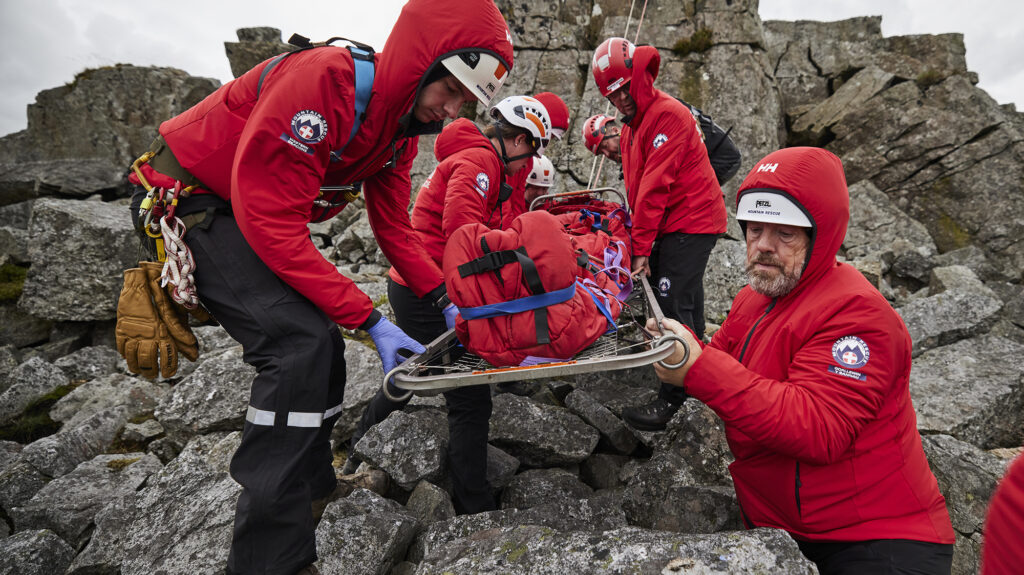
Across England and Wales, mountain rescue volunteers are increasingly providing advanced casualty care in remote environments, often treating seriously ill or injured patients long before they can be transferred to an ambulance or hospital.
As someone who has recently completed the RRMT programme, I have seen first-hand the commitment, study and practical assessment required to reach that standard.
Ensuring casualties receive the highest possible care requires more than commitment and experience. It requires high-quality training, continual professional development and a willingness to keep improving.
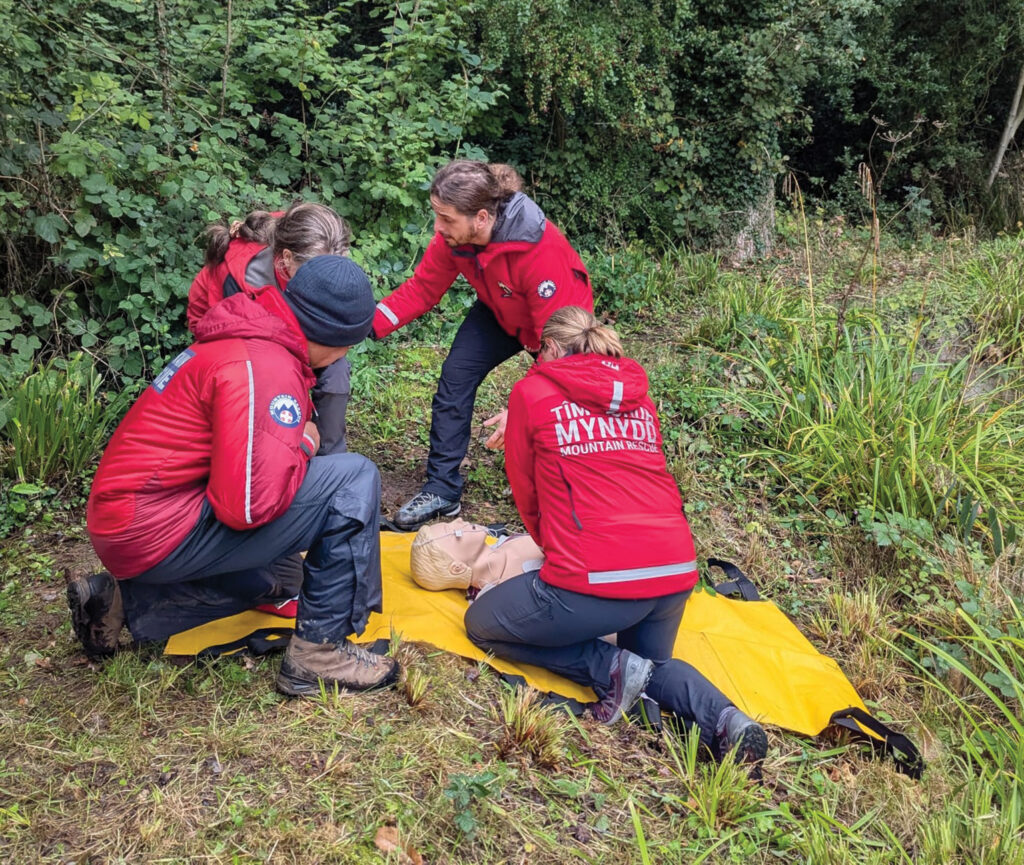
Training for the toughest environments
That ambition sits at the heart of the Remote Rescue Medical Technician (RRMT) programme.
The RRMT programme did not appear overnight. It is the latest chapter in a long process of development, reflecting changes in rescue medicine, technology and the expectations placed on modern search and rescue teams.
As MREW Medical Director Alistair Morris explains. ‘What has been known in search and rescue as the Cas Care qualification has existed for many years. It has developed and evolved as medical technology has changed and as the standards expected of volunteer rescuers have changed too.’
Today, the RRMT programme equips experienced volunteers with the knowledge, skills and judgement needed to provide medical care and critical interventions in some of the most challenging environments in the UK.
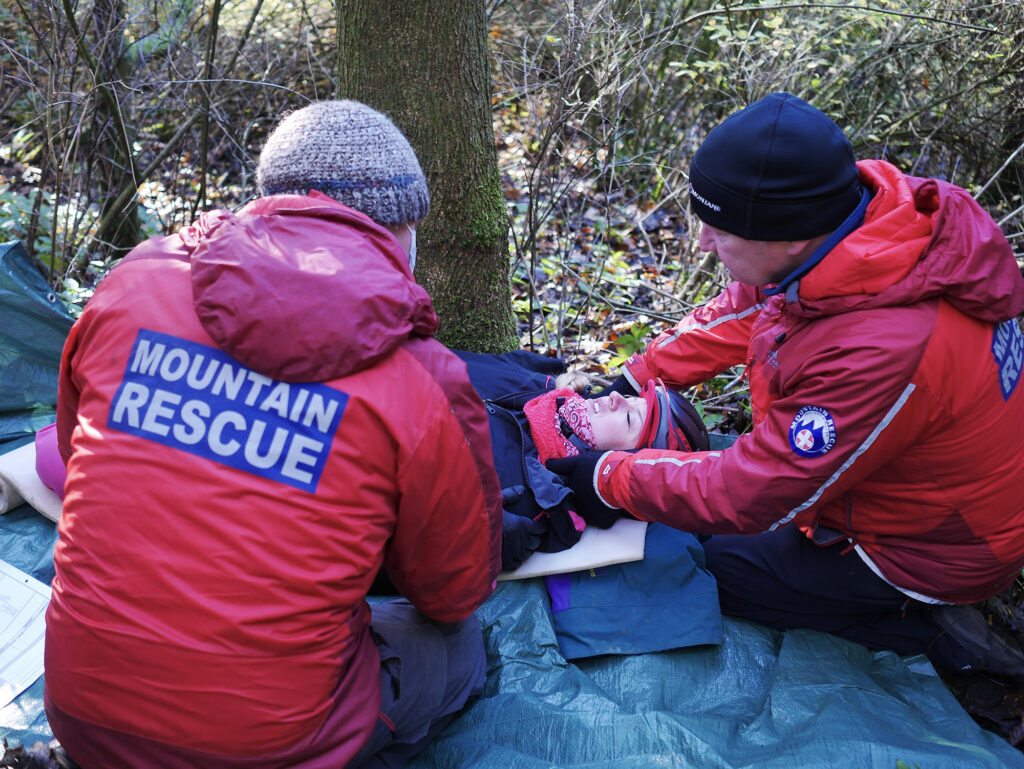
Evolving standards, independent recognition
This commitment to development recently received independent recognition. In 2025, Mountain Rescue England and Wales collaborated with the University of Lancashire to review and quality assure the RRMT programme. Drawing on expertise in mountain medicine and education, the University reviewed the syllabus, learning outcomes and assessment processes to ensure they reflected current best practice and the operational realities faced by rescue teams.
For Alistair, the review recognised the effort and professionalism volunteers have invested in the qualification over many years.
‘I am really pleased that we’ve been able to achieve the sort of recognition associated with this academic review as a mark of all that effort. The use of Medical Technician also highlights the comparability with other qualifications in the healthcare sector.’
In many ways, the review reflects a broader international trend, with mountain rescue organisations increasingly investing in training, research and evidence-based practice to support casualty care in remote environments.
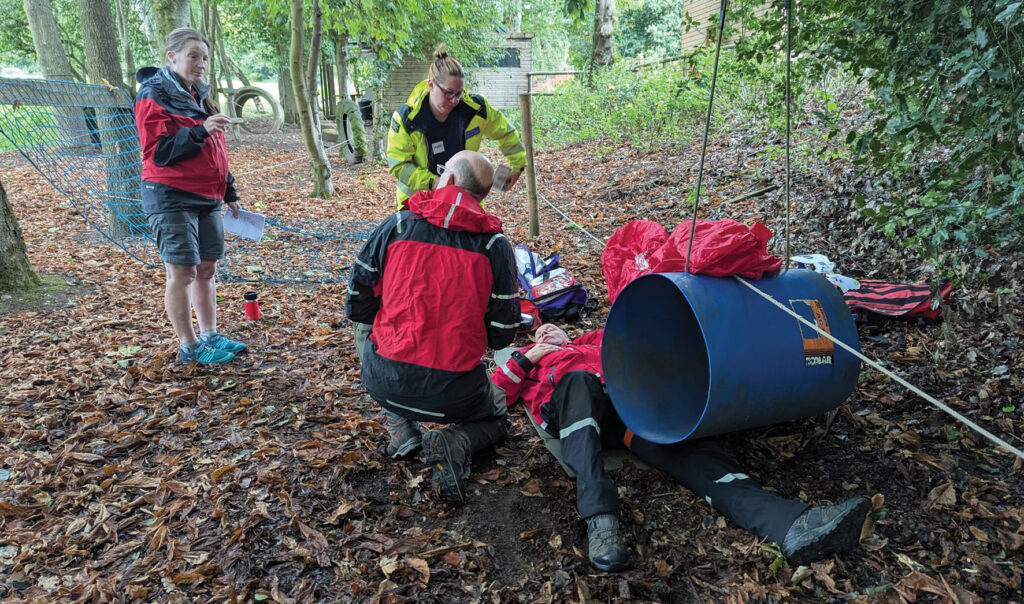
Partnership for the future
The collaboration has since developed into a broader partnership. Following the review, MREW and the University of Lancashire formalised their relationship through a Memorandum of Understanding focused on research, innovation and knowledge exchange.
Nick Wright, lecturer in Mountain Medicine at the University of Lancashire, sees the relationship as an opportunity to strengthen both organisations. ‘The MoU also opens opportunities for experienced MR volunteers to contribute to the delivery of our mountain medicine courses and for the University to support further the work of RRMTs and the healthcare professionals volunteering in mountain rescue in future.’
For the casualty, qualifications, course reviews and academic partnerships are largely invisible. What matters is that, when help arrives, it is delivered by rescuers who are rigorously trained, capable and prepared for the challenges they face.
The RRMT programme helps ensure that, when help arrives, it brings the skills, knowledge and judgement needed to make a difference.